WhatsApp:+86 13560808787
 moduo3201@gmail.com


Friends in the machining and sheet metal manufacturing industries must have struggled with laser cutting processing fees — quotes vary widely, some calculated by the hour, some by the meter, with hidden charges like piercing fees and small-batch surcharges. It’s easy to get overcharged if you’re not careful! I’ve compiled a super practical laser cutting processing fee list that clarifies pricing logic and solves common pain points, so you can feel confident when sourcing processing services.
| Material Type | Thickness Range | Processing Fee per Meter (CNY) | Piercing Fee per Hole (CNY) | Practical Notes |
|---|---|---|---|---|
| Carbon Steel (Q235, etc.) | 1-3mm | 1.8-3.2 | 0.25-0.5 | The most commonly used material with the lowest price, suitable for mass blanking |
| Carbon Steel (Q235, etc.) | 4-6mm | 4-5.8 | 0.5 | Thick plate prices increase slightly, with fast cutting speed |
| Stainless Steel (304/316) | 1-3mm | 2.5-4.5 | 0.5 | Nickel-containing materials require nitrogen protection, so prices are higher than carbon steel |
| Stainless Steel (304/316) | 4-6mm | 6-10 | 0.75-1.3 | Thicker plates lead to greater gas consumption, resulting in a significant price increase |
| Aluminum Plate | 1-3mm | 2.5-4.5 | 0.5 | Highly reflective material with moderate cutting difficulty and reasonable pricing |
| Aluminum Plate | 4-6mm | 8-14 | 1-2 | Thick aluminum plates require high-power lasers, leading to a substantial rise in processing costs |
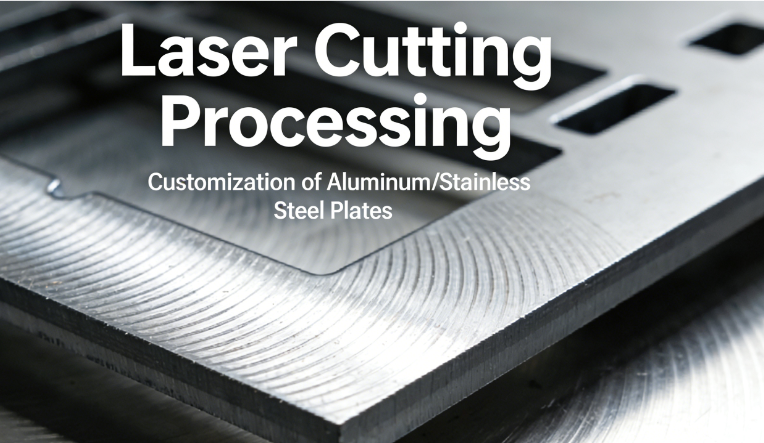
Laser Cutting Processing Fee List (Figure 1)
Additional Charges (Key Points)
Small-batch Surcharge: Orders with total processing fees less than 1,000 CNY are considered small batches. Some manufacturers add a 20% surcharge (ask in advance if this can be waived).
Idle Running Fee: Some manufacturers charge 1.2 times the total price. The reasonable range should be ≤ 1.1 times, or waived for large-volume orders.
Shipping Fee: For local orders with processing fees over 20,000 CNY, or non-local orders over 50,000 CNY, shipping is usually free (negotiate in advance).
Frequently Asked Questions
- Which is more cost-effective: pricing by meter or by hour?Pricing by meter is more transparent and suitable for parts with regular shapes. Pricing by hour (400-1,000 CNY/hour) is better for complex irregular parts. For small batches, we recommend pricing by meter; for large batches, pricing by hour is more cost-effective (calculate cutting speed in advance).
- Why do quotes for stainless steel of the same thickness vary greatly between manufacturers?The core difference lies in gas and technology. Low-priced quotes may use air instead of nitrogen, resulting in yellowish and rusty cut surfaces. High-quality manufacturers use high-purity nitrogen, producing smooth and corrosion-resistant cuts that require no post-processing — which saves money in the long run.
- Is piercing fee mandatory? Can it be waived?Piercing fees are mandatory for small holes (diameter < 5mm), but can be negotiated for large holes (diameter > 10mm). For mass processing, you can request a waiver if the cumulative piercing fee exceeds 50 CNY.
- What’s the maximum thickness laser cutting can handle? How are thick plates priced?Regular maximum cutting thickness:
Carbon steel ≤ 20mm
Stainless steel ≤ 15mm
Aluminum plate ≤ 10mm
20mm carbon steel: approx. 20-30 CNY/meter
15mm stainless steel: approx. 30-40 CNY/meter
(High-power lasers are required, with a slightly longer processing cycle)
Can parts be reworked if dimensions are inaccurate after processing?
Agree on tolerance standards with the manufacturer in advance (±0.1mm for thin plates, ±0.2mm for thick plates). Reputable manufacturers offer free rework if tolerances are exceeded. We recommend test-cutting 1-2 samples before mass processing to confirm dimensions.
Next: None