WhatsApp:+86 13560808787
 moduo3201@gmail.com


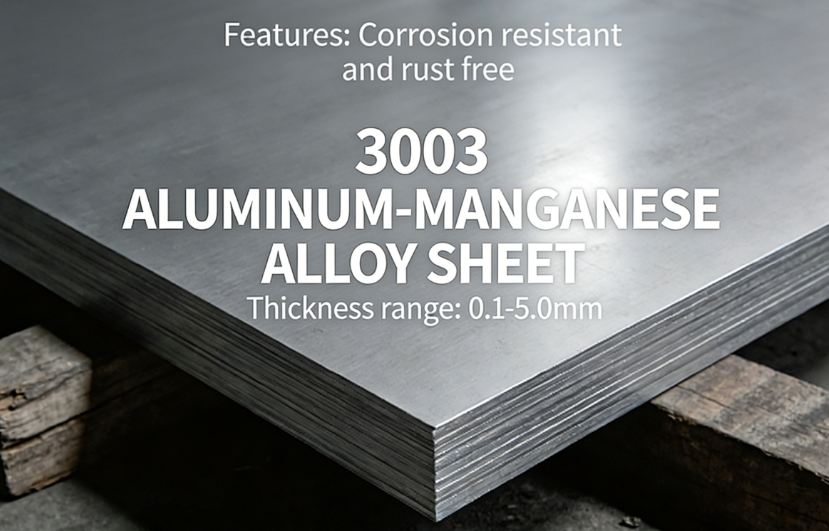
3003 aluminum sheet is not a pure aluminum product — it is the representative of aluminum-manganese anti-rust aluminum alloy with a precisely calibrated composition! It contains ≥98.6% aluminum, with manganese as the core alloying element (1.0%–1.5% content), plus a small amount of silicon and iron to optimize machinability.
Adding around 1% manganese does three key things: it greatly improves the sheet’s strength without reducing plasticity, and endows it with superior corrosion resistance. Especially in humid or salt-spray environments, it is far more durable than pure aluminum sheets! Its weldability is also top-tier — whether using gas welding or TIG welding, the weld joints are firm and crack-free, making it a favorite among factory workers.
Core Specification Table
| Item | Detailed Parameters |
|---|---|
| Alloy Composition | Al ≥98.6%, Mn 1.0%–1.5%, Si ≤0.6%, Fe ≤0.7% |
| Material Tempers | O (annealed), H12, H14, H16, H18 |
| Size Range | Thickness: 0.2–10mm; Width: 1000–2000mm; Length: 2000–6000mm |
| Core Properties | Rust & corrosion-resistant, excellent plasticity, superior weldability, higher strength than pure aluminum |
| Processing Services | Cutting, slitting, bending, stamping, welding, spraying, anodizing available |
| Packaging & Delivery | Moisture-proof film coating + wooden pallet reinforcement; in-stock items shipped same day; nationwide logistics direct delivery |
FAQ
Q1: What is the difference between 3003 aluminum sheet and 1100 aluminum sheet? Which has better rust resistance?
A1: The difference is significant! 1100 is a pure aluminum sheet with ≥99.0% aluminum content; 3003 is an aluminum-manganese alloy sheet with added manganese. 3003 is far superior in rust resistance, especially for outdoor or humid environment applications — it’s the definitive choice. For ordinary indoor decoration, 1100 is more budget-friendly.
Q2: Can 3003 aluminum sheet be used for food-contact kitchenware?
A2: Absolutely! The manganese element in 3003 aluminum sheet is a safe alloying component that complies with national food contact material standards. After standard surface treatment (such as anodizing or spraying), it is completely non-toxic and harmless for use in cookware and food processing equipment.
Q3: Can small-batch orders be custom-sized? Are free samples available?
A3: Yes! We support precise custom cutting for orders ranging from a few square meters of samples to tens of tons of bulk goods. Free sampling is available — check the quality before placing a formal order to achieve zero-risk procurement!
Q4: Can 3003 aluminum sheet be welded? Will welding affect its performance?
A4: 3003 aluminum sheet has top-tier weldability among aluminum alloys — it works with both gas welding and TIG welding. The strength of the weld joint is almost the same as the base material, and its rust resistance does not degrade after welding. It is particularly suitable for fabricating large assembled components.
Q5: What is the approximate price of 3003 aluminum sheet? Is it more expensive than pure aluminum sheet?
A5: It is slightly more expensive than pure aluminum sheets like 1100 and 1070, but offers much higher cost-effectiveness — after all, its strength and rust resistance are vastly improved. The specific price depends on the size and order quantity: thin sheets (0.2–1mm) have a slightly higher unit price, while discounts are available for thick sheets and bulk purchases. Contact customer service directly for a detailed quote.
Next: High-Hardness 2024 Aluminum Alloy Strip | 0.1–5mm Ultra-Thin to Thick Gauges