WhatsApp:+86 13560808787
 moduo3201@gmail.com


Bosses in the stainless steel processing industry—have you ever been stuck with wide stainless steel coils that don’t fit your production needs? Looking for a reliable slitting factory that can ensure no material deformation and precise tolerance control? Today we’re talking about everything you need to know about stainless steel slitting, especially for commonly used grades like 201, 304, and 316L—how to get slitting done right!
Dongguan Tongwang Precision Hardware Co., Ltd. has years of experience in stainless steel slitting. Whether it’s ultra-thin 0.1mm stainless steel strips or thick 3.0mm stainless steel coils, we handle longitudinal slitting with absolute precision!
Stainless steel slitting is the process of cutting a full-width stainless steel coil into narrow strips of your required width using a high-precision slitting machine.
It may seem simple, but there’s a lot of expertise involved! It’s not just a matter of cutting a strip—it’s critical to ensure the slit edges are burr-free, thickness is uniform, and tolerances are tight. Otherwise, you’ll run into endless trouble during subsequent stamping, bending, and welding processes.
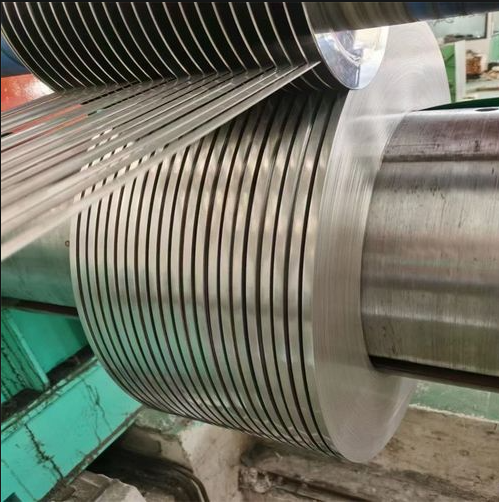
We mainly process the following stainless steel grades, each with unique characteristics and applications—bosses can pick the right one for their needs:
| Material Grade | Slitting Processing Features | Application Scenarios |
|---|---|---|
| 201 Stainless Steel | Cost-effective, high slitting efficiency, suitable for products with low corrosion resistance requirements | Hardware accessories, shelves, decorative strips |
| 304 Stainless Steel | Strong corrosion resistance, no rusting after slitting, precise tolerance control | Kitchen and bathroom products, food machinery, chassis and cabinets |
| 316L Stainless Steel | Super corrosion resistance, ideal for harsh environments; anti-deformation measures required during slitting | Chemical equipment, marine engineering, medical devices |
| 430 Stainless Steel | Ferritic stainless steel, strong magnetism, flat slit edges | Home appliance casings, tableware, auto parts |
Many bosses ask: Why do some factories produce slit strips with rough, burr-covered edges while others make smooth, flat ones? The answer lies directly in raw material quality + processing technology!
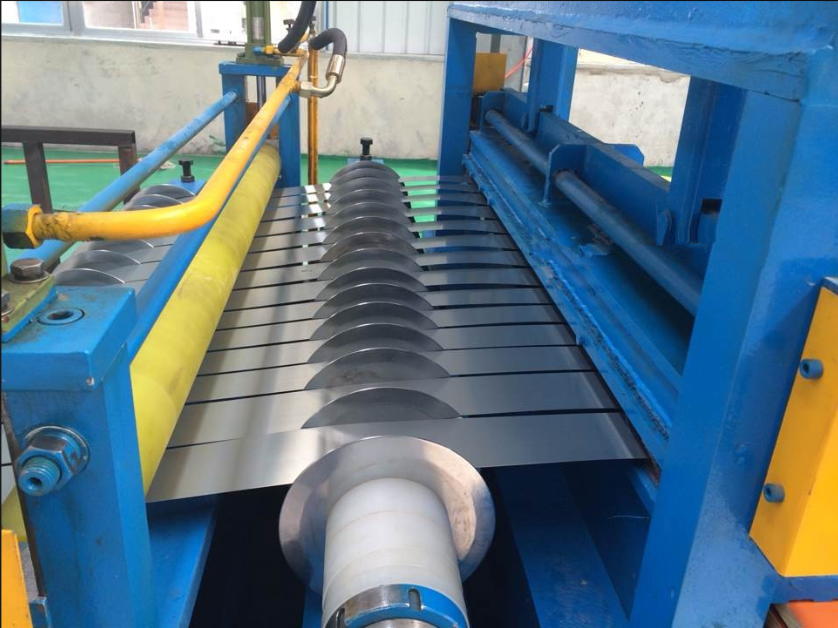
1. Raw Material Quality is the Foundation
First, we must ensure the quality of incoming materials. Whether it’s customer-supplied material processing or our one-stop material + processing service, we always inspect raw materials first: check if the plate surface is flat, thickness meets standards, and material matches the label. Only after passing inspection do we load the material onto the machine.
2. Processing Technology is the Key
We use high-precision longitudinal slitting machines equipped with cemented carbide circular blades. The blade gap is adjusted perfectly to avoid "edge chipping" or "edge curling" issues.
Moreover, during slitting, we adjust the feeding speed according to different materials and thicknesses: for thin materials (0.1–0.5mm), we slow down the speed to prevent stretching and deformation; for thick materials (1.0–3.0mm), we increase the speed appropriately to ensure efficiency.
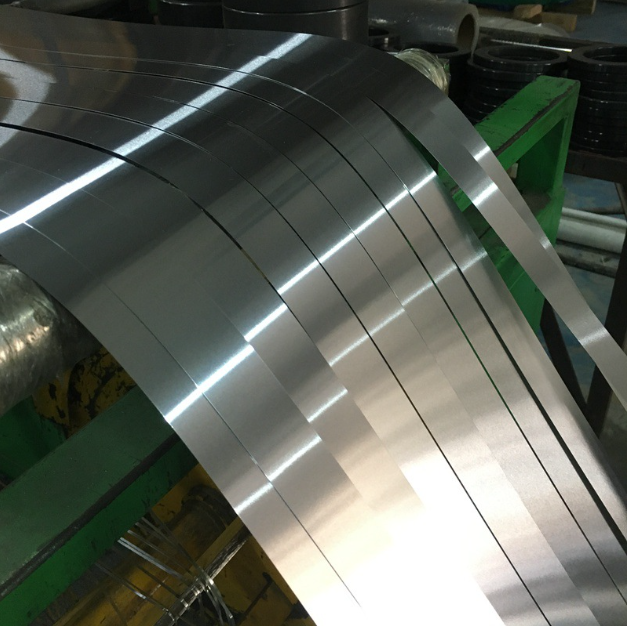
Common FAQ
| Frequently Asked Customer Questions | Our Answers (Colloquial Style) |
|---|---|
| What’s the tolerance you can control for stainless steel slitting? | The standard tolerance is ±0.05mm. If you need higher precision, like ±0.03mm, just let us know in advance—we can adjust the equipment parameters to meet your needs! |
| Is the slitting price the same for 201 and 304 stainless steel? | Nope! 201 is cheaper, so the processing fee is a bit lower. 304 is harder, which wears out the blades faster during slitting, so the processing fee will be slightly higher. The exact price depends on the width and thickness you need. |
| What’s the narrowest stainless steel strip you can slit? | Normally, the minimum width is 5mm. If you need narrower strips, like 3mm, we can use a dedicated narrow-strip slitting machine—just communicate with us in advance! |
| Which is more cost-effective: customer-supplied material processing or one-stop material + processing? | It depends on your order quantity! For small orders, customer-supplied material processing is better—you bring the material, we only charge the processing fee. For large orders, one-stop service is more cost-effective—we get raw materials at wholesale prices, which can save you a lot of money. |
| Will the slit stainless steel strips rust? | For genuine 304 and 316L grades, we do rust-proof treatment (film coating, vacuum packaging) after slitting—they won’t rust under normal storage conditions. For 201 grade, we recommend putting it into production as soon as possible, or taking good moisture-proof measures. |
| How long is the processing cycle? | For small batches (a few coils), we can ship the same day. For large batches, it usually takes 3–5 days. We can also prioritize rush orders to make sure we don’t delay your production schedule! |
| Can you slit stainless steel sheets, or only coils? | Coil slitting is our specialty. We can also handle sheet slitting, but it’s slightly less efficient, so the price will be a bit higher than coil slitting. |
That’s all the key info about stainless steel slitting! If you have 201 or 304 stainless steel coils that need slitting, or want to ask about specific processing quotes, feel free to contact Dongguan Tongwang Precision Hardware Co., Ltd. directly!
Next: None