WhatsApp:+86 13560808787
 moduo3201@gmail.com


Core Parameter Comparison Table
| Comparison Item | 50MN Manganese Steel Strip/Sheet | 65MN Manganese Steel Strip/Sheet | Practical Tips |
|---|---|---|---|
| Width Range | 200–230mm | 200–230mm | Can be slit and cut to order; tolerance controlled within ±0.5mm |
| Thickness Specification | 0.5–10mm (standard); custom thick sheets available | 0.5–10mm (standard); custom thick sheets available | Thin strips for stamped parts; thick sheets for heavy-duty structural components |
| Core Composition | C: 0.48–0.56%, Mn: 0.70–1.00% | C: 0.62–0.70%, Mn: 0.90–1.20% | Higher carbon and manganese content = better hardness and wear resistance |
| Mechanical Properties | Tensile strength ≥645MPa, hardness HB190–220 | Tensile strength ≥785MPa, hardness HB229–285 | 65MN is 30% harder than 50MN, more wear-resistant and durable |
| Heat Treatment Effect | Hardness HRC40–45 after quenching, good toughness | Hardness HRC50–55 after quenching, outstanding wear resistance | 65MN for elastic parts; 50MN for wear-resistant structural parts |
| Application Scenarios | Agricultural machinery parts, automotive leaf springs, wear-resistant gaskets | Spring strips, saw blades, cutting tools, stamping dies | Choose materials based on needs to avoid over-specification and cost waste |
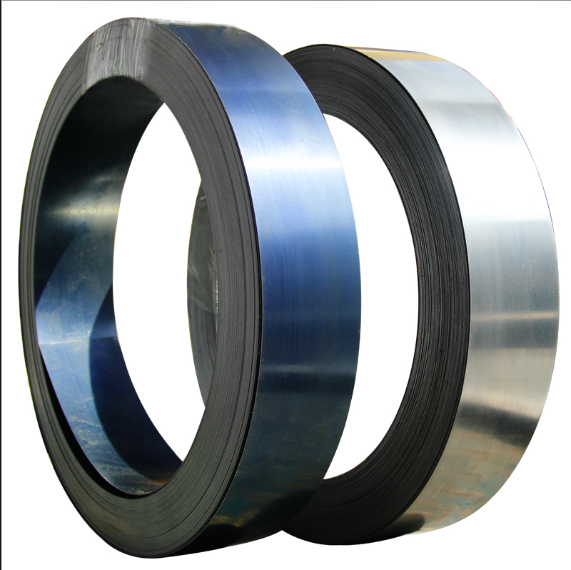
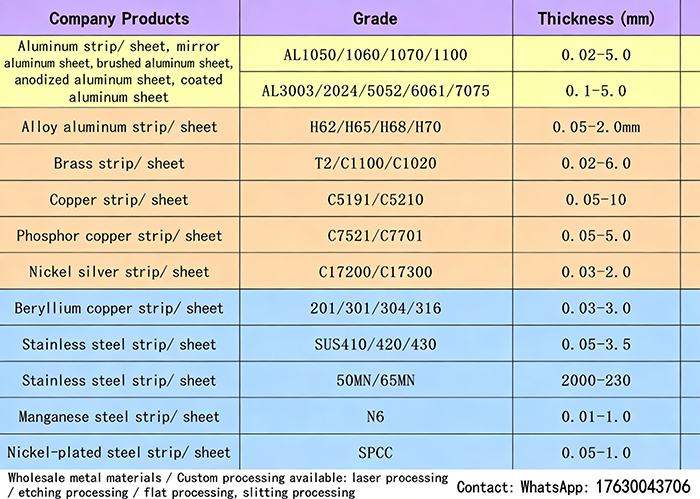
50MN and 65MN both belong to high-quality carbon structural steels. Their core advantages come from the optimal ratio of carbon and manganese — these two elements are the source of manganese steel’s "tough guy properties"!
Core Application Scenarios
1. Transportation & Machinery Manufacturing
Various Springs: The most classic application, including automotive shock absorber springs, clutch shims, engine valve springs, mechanical leaf springs, instrument springs, etc.
Wear-Resistant Parts: Crusher hammers and screen plates for mining machinery, plowshares and blades for agricultural machinery.
Cutting Tools: Saw blades, knives, scrapers, etc. — their high hardness and wear resistance extend service life.
2. Hardware Tools & Precision Components
Hardware Tools: Key stress-bearing components of wrenches and pliers, steel strips for tape measures, spring washers, etc.
Precision Parts: Grinding machine spindles, spring collets, precision machine tool lead screws, bearing rings, etc.
Detailed Performance Parameters (65MN as Example)
| Item | Index/Range | Description |
|---|---|---|
| Chemical Composition (C) | 0.62% ~ 0.70% | High carbon content ensures strength and hardness |
| Chemical Composition (Mn) | 0.90% ~ 1.20% | Improves hardenability and overall performance |
| Tensile Strength (MPa) | ≥ 980 (up to 1300+ after heat treatment) | Ability to withstand extreme loads |
| Yield Strength (MPa) | ≥ 785 | Stress at which material begins plastic deformation |
| Hot-Rolled Hardness (HB) | ≤ 302 | Hardness reference in delivery state |
| Hardness After Heat Treatment (HRC) | 38 ~ 60 | Can be adjusted via heat treatment according to needs |
Common Q&A
Q1: How to choose between 50MN and 65MN?
Q2: What should be noted during welding?
Q3: What is the heat treatment process?
Q4: How to judge quality when purchasing?
Check material certificate: Ask the supplier for chemical composition and mechanical property reports that comply with national standards (such as GB/T 699, GB/T 1222).
Inspect surface condition: Observe whether the surface is flat and free of severe rust, cracks, folds and other defects.
Confirm delivery state: Clarify whether it is hot-rolled, cold-rolled or heat-treated, and whether it meets your processing requirements.
Test dimensional accuracy: Especially check whether the thickness and width tolerances meet the requirements of your drawings.
Next: None