WhatsApp:+86 13560808787
 moduo3201@gmail.com


Aluminum 1100, also known as AA1100 or EN AW-1100, is an industrial pure aluminum with an aluminum content of over 99.0%. It belongs to the 1000 series aluminum alloys and is one of the members with the highest purity, closest to pure aluminum, among all aluminum alloys. If you need a metal that is easy to process, corrosion-resistant and has good electrical conductivity, but does not require high strength, aluminum 1100 is likely to be your ideal choice.
Core Chemical Composition
| Element | Content Range | Function / Description |
|---|---|---|
| Aluminum (Al) | ≥99.00% (some grades ≥99.50%) | Main component, determines the basic properties of pure aluminum |
| Copper (Cu) | 0.05%~0.20% | Trace addition, improves the glossiness of anodized surface |
| Silicon (Si) | ≤0.45% | Impurity element, content strictly controlled to avoid affecting processability |
| Iron (Fe) | ≤0.35% | Impurity element, excess content prevented to avoid increasing material brittleness |
| Other Elements | Single ≤0.05%, Total ≤0.15% | Residual impurities, total content strictly controlled to ensure material uniformity |
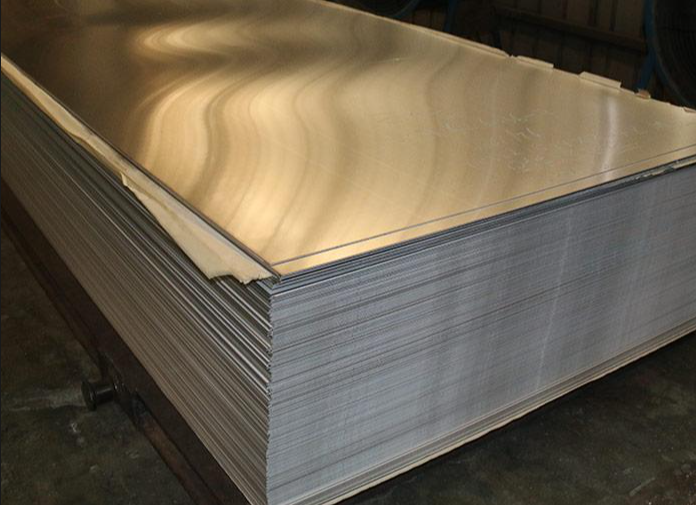
This high-purity formula enables aluminum 1100 to retain the electrical and thermal conductivity of pure aluminum, while also having good processability and corrosion resistance, with a cost-performance ratio far exceeding that of many complex aluminum alloys.
The advantage of aluminum 1100 lies in its versatility and practicality. It can be found in both daily necessities we use every day and professional equipment in industrial production. Moreover, different temper states (O temper for softness, H18 for full hardness, H24 for half hardness, etc.) can meet diverse needs.
- Food PackagingDue to its non-toxic, tasteless properties and compliance with food contact safety standards, as well as its ability to be deep-drawn into complex shapes, aluminum 1100 is often used to make food packaging such as beverage cans, bottle caps and aluminum foil bags. Many of the carbonated drink cans and aluminum foil snack bags we consume daily are made from it, which not only preserves freshness but also is lightweight and easy to carry.
- Architectural DecorationA dense oxide film forms on its surface, making it resistant to wind and rain. In addition, it has strong plasticity and can be processed into curtain walls, ceilings, decorative strips, door and window frames, etc. The exterior curtain walls of many shopping malls and the ceiling decorations in homes are made of aluminum 1100 sheets, which are not only aesthetically pleasing and durable but also reduce the overall weight of the building.
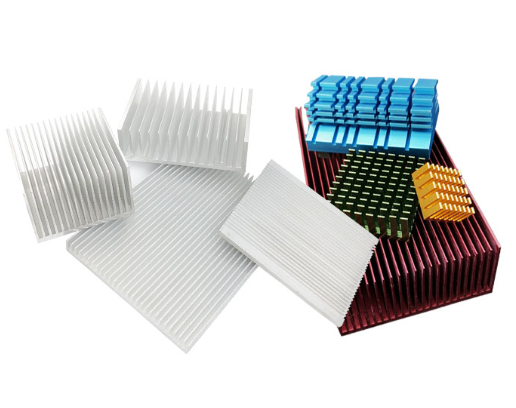
- Electrical and Electronic FieldAluminum 1100 has an electrical conductivity of approximately 65% of the International Annealed Copper Standard (IACS) and a thermal conductivity of up to 237 W/(m·K), making it an ideal conductive and heat-dissipating material. It is commonly used to manufacture wires and cables, transformer casings and heat sinks for electronic equipment. For example, the heat sinks in computer hosts and the bus bars of household wires may be made from it.
- Chemical Equipment FieldIt is resistant to corrosion by most acids and organic substances, so it is widely used in the chemical industry to manufacture equipment such as storage tanks and pipelines. Even when in long-term contact with chemical media, it is not easy to rust and damage, which greatly reduces equipment maintenance costs.
- Daily Necessities and Other Fields: Lightweight, Practical and Cost-EffectiveAluminum 1100 is commonly used to make daily cookware (frying pans, aluminum pots), tableware, lamp reflectors, as well as automotive body panels, ship components, bus doors, etc. With a density of only 2.71 g/cm³, about 1/3 that of steel, products made from it are both lightweight and sturdy. Additionally, its production process is simple and the price is relatively low, offering an ultra-high cost-performance ratio.
FAQ
- Is aluminum 1100 pure aluminum or an aluminum alloy?It is industrial pure aluminum, belonging to the 1000 series pure aluminum family with an aluminum content of ≥99.0%. Unlike complex aluminum alloys with large amounts of added alloying elements, its core advantage lies in the stable basic properties brought by high purity.
- Can aluminum 1100 be welded? Is it easy to process?It is extremely easy to weld and supports various welding methods such as gas welding, argon arc welding and resistance welding, with high-strength weld joints that are not prone to cracking. In addition, it has excellent cold working performance and can be formed into various complex shapes through rolling, stretching, stamping, bending and other processes, especially showing excellent deep-drawing results.
- What is the strength of aluminum 1100? Is it suitable for load-bearing structures?It has a medium to low strength level and cannot be strengthened by heat treatment, with a yield strength of approximately 35-50 MPa. It is suitable for non-load-bearing structures such as decorative parts, packaging products and heat dissipation parts, but is not recommended for heavy-load applications such as bridges and mechanical load-bearing components.
- Is aluminum 1100 corrosion-resistant? Can it be used outdoors?It has excellent corrosion resistance! A dense oxide film (Al₂O₃) naturally forms on its surface, which can effectively block the erosion of oxygen and moisture. It can not only be used for outdoor architectural decoration but also for long-term use in humid and slightly corrosive environments without worrying about rusting.
- What is the difference between aluminum 1100 and other aluminum alloys (such as 3003, 5052)?The biggest difference is purity: aluminum 1100 has an aluminum content of ≥99%, focusing on high purity and excellent electrical and thermal conductivity; 3003 contains manganese, providing higher strength; 5052 contains magnesium, offering better corrosion resistance and strength, but at a higher price. If you have requirements for purity, electrical conductivity and thermal conductivity, aluminum 1100 provides the best cost-performance ratio.
'} Next:
Next: Complete Guide to Aluminum Alloy Profile Specifications & Models