WhatsApp:+86 13560808787
 moduo3201@gmail.com


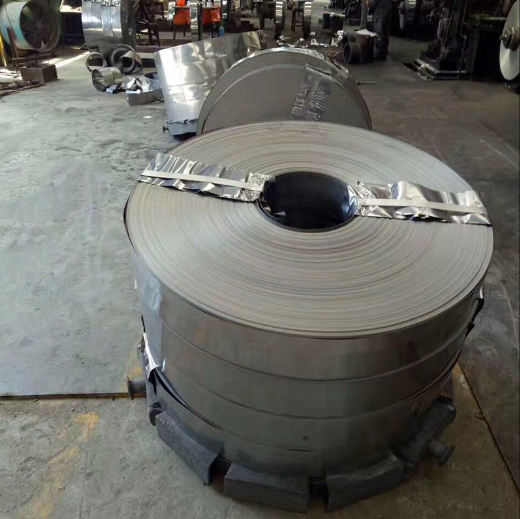
1. Sturdy Base Material: SPCC Cold-Rolled Steel Strip
Excellent plasticity, weldability, and cold-forming performance
Smooth, flat surface after cold rolling
Stable mechanical properties
In simple terms, SPCC is like a highly malleable "dough" that can be easily stamped and bent into various complex shapes, making it an ideal base material for processing.
2. Core Advantages of Nickel-Plated Layer
Superior Corrosion Resistance: Nickel has stable chemical properties, effectively isolating air and moisture to prevent internal steel from rusting and greatly extending product service life.
Excellent Conductivity & Weldability: Nickel is a good electrical conductor with a weld-friendly surface, making it an ideal choice for battery connectors and electronic components.
Attractive Appearance & Wear Resistance: The nickel layer has a bright silver-white luster, with moderate hardness and wear resistance.
Diversified Coating Types: According to process and appearance, common types include ordinary nickel plating, mesh nickel plating (surface embossed to enhance welding effect), and penetration nickel plating.
3. Core Application Scenarios & Advantages
| Application Field | Specific Uses | Core Advantages & Requirements |
|---|---|---|
| Secondary Battery Manufacturing | Tabs, connectors, leads, and current collectors for Ni-Cd, Ni-MH, and lithium batteries | Good conductivity, firm welding, corrosion resistance to electrolyte; 0.05–0.2mm thickness is widely used |
| Electronic & Electrical Appliances | Internal connections for power tools, special lighting components, grounding plates or shielding cases for various electrical appliances | Balances strength and conductivity; more cost-effective than pure nickel strip |
| Precision Stamped Parts | Communication equipment connectors, automotive electronic terminals, micro-motor parts, etc. | SPCC base material has excellent stamping performance; nickel plating meets anti-corrosion and electrical contact requirements; customizable according to drawings |
| Other Industrial Fields | Hardware accessories, decorative strips, shrapnel, precision instrument structural parts, etc. | Provides structural strength and surface protection with an attractive appearance; supplied in coil or sheet form |
Key Application in New Energy Batteries
4. Critical Technical Parameters
| Parameter Item | Common Specifications/Indicators | Description & Impact |
|---|---|---|
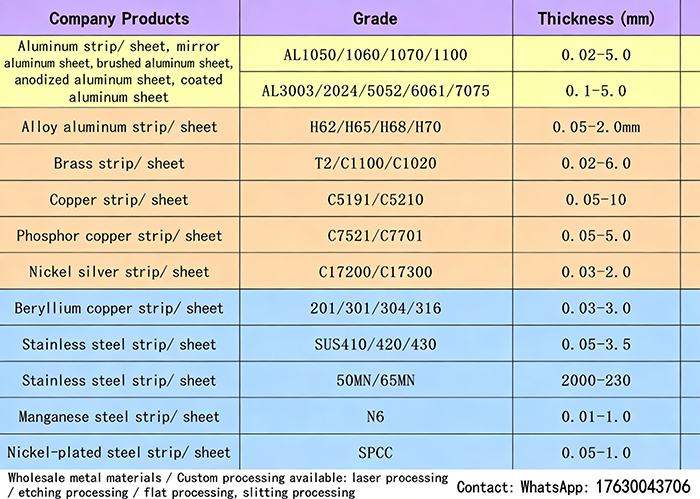
| Base Material Thickness | 0.05/0.08/0.1/0.12/0.15/0.2/0.25/0.3mm … up to 1.0mm | Determines product flexibility and load-bearing capacity; ultra-thin (0.05mm) for precision electronics; thicker for structural parts |
| Nickel Coating Thickness | Usually ≥1.5μm (double-sided); ≥3μm recommended for battery applications | Directly affects corrosion resistance and weldability; thicker coating = better protection but higher cost |
| Mechanical Properties | Annealed (S), 1/8 Hard (8), 1/4 Hard (4), 1/2 Hard (2), Hard (1) | SPCC base material treated with different heat processes; annealed state is softest for deep drawing; hard state has high strength and good elasticity |
| Surface Condition | Matte (D), Bright (B); ordinary, mesh, penetration type | Affects appearance and adhesion of subsequent processing (painting, welding); mesh surface enhances welding effect |
| Supply Form | Coil, Sheet (flat plate) | Coil suitable for continuous automated production; sheet suitable for small-batch or custom-sized stamping |
5. Thickness vs. Application Distribution
| Thickness Range | Category | Typical Applications | Core Features |
|---|---|---|---|
| 0.05–0.15mm | Ultra-Thin | Lithium battery jelly roll connectors | High precision, easy to weld, core consumable |
| 0.2–0.3mm | Standard | Battery tabs | Excellent conductivity, bend-resistant |
| 0.5–1.0mm | Thick | Battery casings/structural parts | High mechanical strength, structural support |
6. Frequently Asked Questions (FAQ)
Q1: What is the difference between nickel-plated SPCC steel strip and pure nickel strip? Which should I choose?
Q2: What to do if the coating has pinholes, pitting, or poor adhesion?
Q3: I heard about the "pre-nickel plating" process — how is it different from ordinary electroplating?
Q4: How to judge the quality of nickel-plated steel strip?
Appearance: The coating should be uniform, continuous, and shiny, without missing plating, peeling, spots, or obvious color difference.
Adhesion: Perform a cross-cut test or repeated bending test to check if the coating peels off.
Thickness: Use a coating thickness gauge to verify if it meets the nominal requirements and is uniform.
Corrosion Resistance: Verify through salt spray test. The most reliable way is to request material certificates and third-party test reports from the supplier.
Q5: What is the difference in usage between 0.05mm and 1.0mm thick nickel-plated steel strips?
0.05–0.15mm ultra-thin strip: Extremely flexible, used in micro-lithium batteries, precision sensors, flexible circuits and other fields with strict space and weight requirements.
0.3–0.5mm common range: Widely used in ordinary battery connectors, electrical shrapnel, shielding cases, etc.
0.8–1.0mm thick sheet: Provides sufficient structural strength and rigidity, used in load-bearing brackets, casings, or grounding connectors for large equipment. Always "choose the right material according to the application".
Next: None